
Inside Idaho’s Upper Priest River: A Quiet Old‑Growth Sanctuary

There are still places in the inland Northwest that feel less like destinations and more like withheld breath. The Upper Priest River Research Natural Area is one of them.
Far north Idaho has many well-known outdoor names, and Priest Lake is one of the biggest. Cabins, boat launches, campgrounds, summer traffic, sandy beaches, and lake views shape much of the public image of the area. But this is not that Priest Lake story. The Upper Priest River Research Natural Area sits farther north, in a quieter, protected, roadless section where the forest takes over and human presence feels temporary.
This is a place of old-growth western red cedar and hemlock, wet green light, moss, fallen giants, and mist caught in the dark timber. It is not built for quick scenic pullouts or easy checklists. It is rarely filmed, rarely promoted, and easy to overlook if the search begins and ends with the main lake.
That quiet is part of its value.

This is not the busy Priest Lake most people know
Priest Lake draws people for good reason. The water is clear, the mountains frame the horizon, and the southern and central lake areas have enough access to support classic North Idaho summer travel. Many visitors experience the region through beaches, boats, campgrounds, and roads that lead to familiar trailheads or viewpoints.
The Upper Priest River Research Natural Area asks for a different kind of attention.
It belongs to the more remote northern story of the Priest Lake country. The focus shifts from recreation infrastructure to ecological protection. Roads no longer define the experience. The river, wet forest, and old growth do.
That difference matters because names can mislead. Someone hearing “Priest” may picture docks, warm afternoons, and open lake water. The protected upper river country carries a separate mood. It is more enclosed. More shadowed. More private. It does not announce itself with big roadside views.
The landscape feels shaped by moisture. Mist gathers in low places. Cedar trunks rise broad and fluted. Hemlocks hold shade even when the sky brightens. The forest floor is uneven with roots, nurse logs, duff, moss, and young trees growing from the bodies of old ones.
This is not a casual extension of the main lake scene. It is a roadless northern section with a conservation purpose. That does not make it off-limits in every sense, but it does mean the place should be approached as a living reference site, not just a backdrop.
Research Natural Areas exist to protect examples of native ecosystems and natural processes. They help scientists, land managers, and careful observers understand what forests can be when they are allowed to age, fall, rot, regrow, and change with limited disturbance.
In a region where many forests have been logged, burned, replanted, crossed by roads, or reshaped by recreation, a protected old-growth pocket carries unusual weight. It shows continuity. It holds memory in wood, soil, and shade.
Old-growth cedar and hemlock create the hidden beauty
The beauty here is not the grand, obvious kind. It is not a single overlook where the whole scene falls into place. It is layered and close.
Old-growth cedar and hemlock forests are built from time. A young forest can be beautiful, but it rarely has the same structure. In an old forest, trees stand at different ages and sizes. Dead wood lies across the ground. Some trunks are hollow. Some are broken high above the forest floor. Some are wrapped in moss and lichen. Some have become nurseries for the next generation.
Western red cedar brings a particular feeling to wet North Idaho forests. Its bark peels in long vertical strips. Its roots grip the damp ground. Its canopy filters light into a soft green shade. Hemlock adds fine texture, with drooping leaders and dense branches that deepen the sense of enclosure.
Together, they create a forest that feels hushed even when water is moving nearby.

The most striking details are often low to the ground:
Moss swallowing old logs
Cedar roots twisting around stones and rotting wood
Ferns bright against dark soil
Water beading on needles
Small hemlock seedlings rising from nurse logs
Mushrooms breaking down fallen wood
Streamside plants bent by mist and rain
These details explain why the place is so hard to capture quickly. A camera pointed carelessly into the trees may only record darkness and clutter. The human eye does better. It adjusts. It notices wet bark, depth, and small movements. It feels the forest before it organizes the scene.
That may be one reason the area remains rarely filmed. It does not perform on demand. It rewards patience over production.
The old-growth character also changes how sound behaves. Thick vegetation absorbs noise. Mist softens distance. Footsteps seem louder than they should. A bird call can feel close, then vanish into the timber. Moving water may be heard before it is seen.
This kind of place can make people lower their voices without being asked.
The main attraction is not a view. It is the rare feeling of being inside a forest that has been allowed to remain deeply itself.
The roadless northern setting changes the experience
Roadless places ask more from visitors and give something different in return. They tend to filter out haste.
In a roaded scenic area, the rhythm is simple. Drive, stop, look, take photos, move on. The experience is shaped by convenience. Roadless country works against that pattern. Distance matters more. Weather matters more. Route knowledge matters more. Small mistakes matter more.
The Upper Priest River country is not the place to improvise based on a vague map screenshot. Anyone planning to enter the broader area should check current public land maps, seasonal conditions, river levels, forest orders, and access guidance from the appropriate land manager before going. Conditions can change, and protected areas may have rules meant to limit impact.
The point is not to make the area sound forbidding. It is to be honest about its character.
Roadless does not only mean “hard to reach.” It also means the forest is spared many of the repeating injuries that come with roads. Roads fragment habitat. They invite noise. They change drainage. They bring weeds, trash, and more frequent disturbance. A roadless protected section preserves a kind of continuity that is increasingly rare.
That continuity is part of what makes the place feel so different from the busier Priest Lake corridor.

The protected nature of the area also changes what “visiting” should mean. This is not a place that benefits from heavy promotion, crowd pressure, or a rush to turn every quiet corner into content. The best approach is low-impact and restrained.
A respectful visit means:
Staying on durable surfaces where travel is allowed
Avoiding damage to moss, seedlings, and fragile streambanks
Packing out every bit of trash
Keeping noise low
Giving wildlife space
Avoiding shortcuts that create erosion
Checking whether any special restrictions apply
Leaving natural objects where they are
The forest may look tough because the trees are huge, but old-growth systems can be delicate at ground level. A crushed seedling, a widened muddy track, or repeated trampling around a photogenic log can leave marks that last.
The best sign of a good visit is that the forest does not seem to notice.
Why mist, quiet, and low visibility make it special
Some landscapes became famous because they photograph easily. They have strong lines, bright colors, open views, and predictable light. The Upper Priest River Research Natural Area belongs to another category. Its appeal comes from restraint.
Mist hides as much as it reveals. It removes hard edges. It makes the forest feel deeper than it is. It turns background trees into silhouettes and pushes attention toward the nearest trunk, fern, or water-darkened root.
Quiet works the same way. Without the constant presence of engines, voices, and built structures, the senses recalibrate. Small things gain weight. Water dripping from cedar boughs becomes noticeable. A raven overhead feels like an event. The shift of light through clouds changes the whole mood of the forest floor.
This is why the area has such strong appeal for certain photographers, naturalists, writers, and people who prefer wild places without spectacle. It is not empty. It is full, but in a way that resists quick consumption.
For filming, that creates both challenge and opportunity.
The challenges are real. Low light under cedar and hemlock can make handheld footage difficult. Wet weather limits gear choices. Dense forest can confuse autofocus. The most meaningful scenes may have little obvious motion. A short video clip may not capture the feeling of standing in cool air while mist moves between trunks.
But the opportunity is just as real. Rarely filmed places have not been visually flattened by repetition. There is no standard postcard angle. No single image owns the place. A careful camera can show small truths rather than repeat a familiar view.
Strong subjects might include:
Mist moving through layered tree trunks
Water droplets falling from cedar tips
The scale difference between a hand and old bark
Seedlings growing from a nurse log
Slow pans across ferns and deep shade
Reflections in dark, quiet water
The texture of decay and renewal on the forest floor
The key is patience. The forest reveals itself slowly, and the best images often come after the first obvious shots are done.
How to understand the place without loving it to death
Hidden wild places face a strange problem. They need advocates, but too much attention can change them. A quiet protected forest can be harmed by the same admiration that brings people to care about it.
That is especially true in the age of location tagging, short-form video, and fast travel lists. A place described as “hidden” can become a target. A rarely filmed forest can become a challenge. The result is often more foot traffic, more informal routes, more drone noise, more trash, and more pressure on land managers.
The better path is slower and more thoughtful.
Writing about the Upper Priest River country should make the case for respect, not conquest. Photographing it should favor humility, not extraction. Visiting it should begin with the understanding that access is a privilege tied to responsibility.
This means accepting that some places do not need to be made easy. They do not need more signs, more content, more exact directions in every caption, or more proof that someone has been there. Their value comes partly from remaining quiet enough for natural processes to continue.
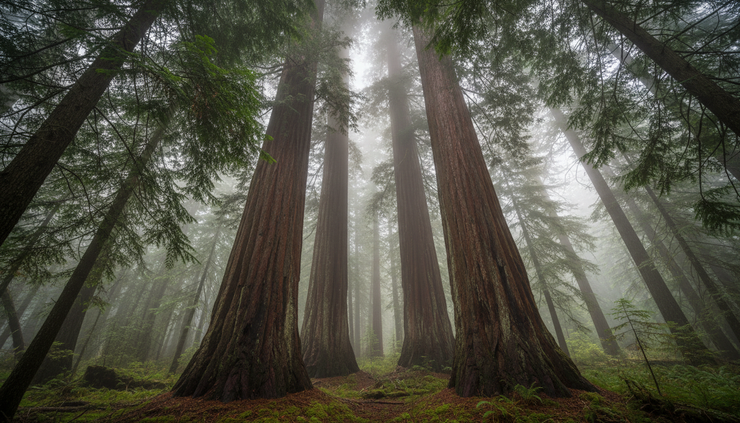
There is a useful way to think about this kind of landscape. The forest is not scenery surrounding a human adventure. The forest is the main subject. The visitor is temporary.
That shift changes behavior. It encourages slower travel and fewer assumptions. It makes a person less likely to step off route for a better angle or break branches for a cleaner frame. It makes silence feel like participation rather than absence.
For anyone drawn to wild North Idaho, this is the deeper lesson. The most beautiful places are not always the most accessible, the most dramatic, or the most photographed. Sometimes they are wet, dim, and difficult to explain. Sometimes their beauty depends on being left mostly alone.
The lasting pull of the Upper Priest River forest
The hidden old-growth beauty of Upper Priest River Research Natural Area comes from more than big trees. It comes from the whole protected system: cedar, hemlock, mist, river influence, dead wood, young growth, shade, quiet, and distance from the busier patterns around the main Priest Lake area.
It is a reminder that North Idaho still holds places where the forest sets the terms. Not every meaningful landscape needs a viewpoint, a crowd, or a polished travel identity. Some places matter because they remain hard to summarize.
The best way to appreciate this roadless northern forest is with care. Learn before going. Follow current rules. Travel lightly. Keep the quiet intact. Let the old growth be more than a backdrop.
A place like this does not ask to be consumed. It asks to be noticed, respected, and left whole.


Comments