
Tumbledown Mountain’s Hidden Alpine Pond in Maine

Tumbledown Mountain feels like a reward that Maine somehow forgot to over-advertise. It has the ingredients hikers chase all over the Northeast: a high mountain pond, ledges with open views, steep rocky trails, and a real sense of wildness. Yet compared with Katahdin, the Bigelows, or the big-name peaks along the Appalachian Trail, Tumbledown stays surprisingly quiet.
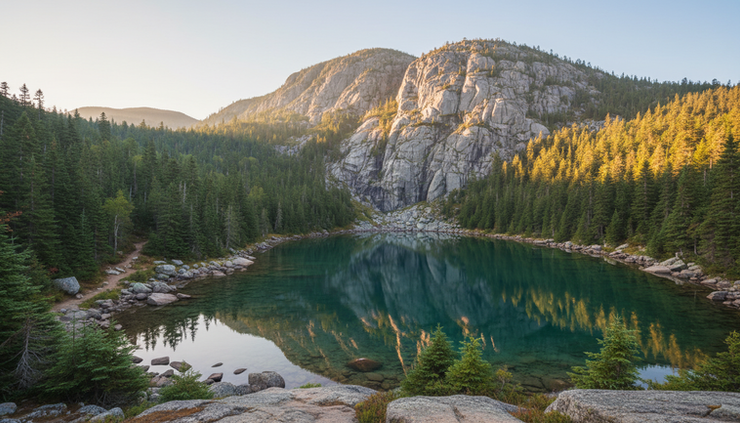
Set in western Maine near the town of Weld, Tumbledown is not an easy stroll. Its trails climb through forest, boulder fields, roots, slabs, and scrambles. The payoff is Tumbledown Pond, a clear summit-area alpine pond tucked below rugged cliffs. On a calm day, the water reflects the ridgeline like glass. On a windy day, the whole basin feels raw and exposed in the best Maine way.
This is the kind of hike that suits people who want more than a viewpoint. Tumbledown gives you a full mountain experience without the crowds often found on the state’s most famous trails.
Why Tumbledown Mountain stands out
The best hikes have a moment when the trail suddenly changes character. On Tumbledown, that moment comes when the woods open and the pond appears.
For much of the climb, the hike feels like a classic Maine mountain trail. It is rocky, rooty, and sometimes muddy. The forest is dense in places, with spruce, fir, birch, and moss-covered stone. Then the land lifts into a higher basin, and the view widens. The pond sits in a bowl of stone and trees, with cliffs rising behind it.
That contrast is what makes the hike memorable. You are not just climbing to a bare summit marker or a distant overlook. You are walking into a place that feels self-contained.
Tumbledown also has a nice balance of drama and accessibility. It is challenging, but it does not require a full expedition. It feels remote, but it sits within reach of western Maine towns and back roads. It has rugged features, but hikers can choose routes that match their comfort level.
A few things make it special:
A rare alpine pond setting
Tumbledown Pond gives the hike a destination that feels different from most New England summits.
Rugged cliffs and ledges
The mountain has a wilder feel than its height may suggest.
Multiple trail options
Hikers can choose a steeper, scramblier route or a more moderate approach.
Lower crowd pressure
It still gets popular on good summer weekends, but it generally feels quieter than Maine’s headline peaks.
A strong sense of place
The mountain, pond, forest, and cliffs fit together in a way that feels distinctly western Maine.
Tumbledown is also a reminder that elevation does not tell the whole story. It is not one of Maine’s tallest mountains, but the experience feels bigger than the number on a map.
You may also enjoy reading about this beautiful area: Cabinet Mountains: Montana’s Rain‑Carved Wilderness Sanctuary
What the hike is really like
Tumbledown Mountain is best treated as a real mountain hike, not a casual pond walk. The terrain can be rough from the start, and conditions change quickly as the trail gains elevation.
The route begins on forested paths, often with uneven footing. Roots cross the trail. Rocks shift underfoot. In wet weather, sections can turn slick. Maine trails tend to take a direct line up the mountain, and Tumbledown is no exception.
As the climb continues, the trail grows steeper and more rugged. Depending on the route, hikers may encounter boulders, slabs, tight rock passages, and short scrambles. This is part of the appeal, but it also means good footwear matters. Lightweight sneakers may be fine for a dry town path, but they are not ideal here.
The pond area feels like the emotional summit of the hike. Many hikers stop there for lunch, photos, and a long rest. From the shore, the cliffs and ridges frame the water. It is one of those places where sitting still feels as worthwhile as climbing higher.
Some hikers continue beyond the pond to nearby ledges or summit viewpoints. Others treat the pond as the main event and head back down. Either choice can make for a satisfying day, especially if the weather is clear.
Tumbledown is not famous because it is easy. It is loved because it feels wild, scenic, and earned.
The descent deserves respect. Rocky Maine trails often feel harder going down than up. Fatigue sets in, and wet roots or angled stone can catch a careless step. Trekking poles help on many sections, though they may need to be packed away for hands-on scrambling.

Choosing a route up Tumbledown
Tumbledown has several trail options, and the right one depends on the kind of hike you want. Trail names and access details can change over time, so use a current map before going. In general, hikers often choose among routes such as the Brook Trail, Loop Trail, Parker Ridge Trail, and connecting paths around the pond.
The routes vary in steepness and difficulty. Some are more direct and rugged. Others take a longer, more gradual line. Many hikers combine trails into a loop so the day feels more varied.
Here is a practical way to think about the common options.
Route style | Best fit | What to expect |
Direct climb | Hikers who want a shorter, steeper ascent | Rough footing, steady elevation gain, faster access to the pond |
Scrambly route | Confident hikers who enjoy hands-on terrain | Boulder sections, tight passages, exposed-feeling rock, slower going |
Ridge approach | Hikers who prefer a more gradual day | Longer mileage, forest walking, ridge views, less abrupt climbing |
Pond-focused out and back | Hikers who want the classic reward without extending the day | Climb to Tumbledown Pond, rest, return the same way |
The Loop Trail is often described as the most adventurous option. It includes steep, scrambly terrain and is not the best choice for everyone. The well-known rock passage sometimes called Fat Man’s Misery is part of the mountain’s lore, but tight scrambles are not fun for hikers who dislike confined spaces or exposure.
The Brook Trail is a common route to the pond and is often used by hikers looking for a more direct climb. It still has the rocky, wet, rooty character that defines the mountain, so “direct” does not mean easy.
The Parker Ridge side can make the hike feel more open and scenic, especially if linked into a longer loop. It is a good option for hikers who want a fuller day and more variety.
For a first visit, many people build the hike around reaching Tumbledown Pond, then decide whether to add ledges or extra mileage based on daylight, energy, and weather. That flexible mindset works well here.
A few route-planning tips help:
Carry a paper map or downloaded offline map.
Do not rely on cell service.
Start early on summer weekends.
Check road and trailhead access before leaving.
Turn around if the rock is wet and the route feels beyond your comfort level.
Tumbledown rewards preparation. It can feel peaceful and forgiving near the pond, but the mountain gets steep enough that small mistakes matter.

When to hike and what to pack
The best hiking season for Tumbledown usually runs from late spring through fall, with summer and early fall offering the most reliable conditions. Mud, lingering snow, ice, and high water can affect the shoulder seasons. Winter turns the mountain into a much more serious trip that requires snow travel experience and proper gear.
Early fall may be the best time to see the mountain at its most photogenic. Cooler air makes the climb more comfortable, bugs fade, and the pond sits below ridges brushed with red, orange, and gold. Summer brings warmer swimming weather, though alpine ponds are fragile places and should be treated carefully. Avoid soap, food scraps, and trampling along the shoreline.
Weather matters more than many first-time visitors expect. The pond and upper ledges can feel exposed when wind moves in. A dry, calm day makes the rock easier and the views better. A wet day can turn the same route into a slippery grind.
Pack for a rugged half-day or full-day hike, depending on route choice and pace.
Bring:
Sturdy hiking shoes or boots with good tread
More water than you think you need
Snacks or lunch for the pond
Rain shell or wind layer
Warm layer, even in summer
Map and navigation backup
Headlamp
Small first-aid kit
Bug protection in late spring and summer
Trekking poles if you like them for descents
Leave behind the idea that this is a quick photo stop. The mountain asks for attention. That is part of why it stays rewarding.
Good trail manners also matter. Tumbledown’s quiet character depends on hikers treating it with care.
Stay on marked trails where possible.
Pack out every scrap of trash.
Give uphill hikers space.
Keep noise low around the pond.
Avoid widening muddy trails by walking around puddles.
Respect any posted closures or land-use rules.
This is not just about preserving scenery. Alpine and high-elevation environments recover slowly. A single careless shortcut may not look like much, but repeated foot traffic can scar a slope or shoreline for years.
Why it feels quieter than Maine’s famous peaks
Maine has no shortage of big-name hikes. Katahdin draws people from across the country. The Bigelow Range has serious Appalachian Trail appeal. Saddleback and the western high peaks attract hikers chasing long views and major summits.
Tumbledown sits in a different category. It is known, but not overrun in the same way. Part of that comes from location. Western Maine takes a bit more commitment than a roadside attraction or a heavily promoted national park hike. Part of it comes from the trails. Rugged footing filters out casual traffic.
The mountain also has a quieter kind of fame. People often hear about it from friends, local hikers, camp owners, or families who return year after year. It is the sort of place that builds loyalty rather than hype.
That does not mean solitude is guaranteed. A bluebird Saturday in July or September can still bring a busy trailhead and plenty of people at the pond. For a quieter experience, hike on a weekday, start early, or visit outside peak foliage weekends.
Even when others are around, Tumbledown feels spacious. The pond basin has room to breathe. The cliffs pull your attention upward. The woods absorb sound. Compared with crowded summit rocks elsewhere in New England, this place still offers a slower rhythm.
That quiet is one of the hike’s greatest gifts. It lets the details stand out: wind over the ridge, water against stone, boots on roots, the sudden flash of a bird through spruce. Big views are wonderful, but small moments often stay longer in memory.

A quiet Maine classic worth the effort
Tumbledown Mountain is not the tallest hike in Maine, and that is part of its charm. It does not need scale to impress. The trail earns attention through texture: rough stone, dark forest, cold water, high ledges, and that sudden alpine pond tucked among the cliffs.
For hikers drawn to quieter trails, the mountain offers something rare. It feels adventurous without feeling unreachable. It feels known without feeling crowded beyond recognition. It gives a strong payoff, but only after enough work to make the view feel personal.
Go prepared, choose a route that fits your comfort level, and give yourself time to linger at the pond. The best part of Tumbledown is not rushing to check off another summit. It is reaching the water, sitting on warm stone, and realizing that some of Maine’s finest mountain moments still belong to the quieter places.
Thanks for spending a few quiet minutes from my home in Idaho with me. I love sharing these lesser known wilderness places — they’re the same landscapes that inspire the rustic lamps I make back home in Idaho. If you ever want to see them, you can visit my website at ClearwaterCabinLighting.com


Comments